



1. Extremely High Hardness
High hardness helps the pin resist mechanical wear, surface damage and dimensional deterioration caused by repeated contact with metal workpieces.



Ultra-high hardness and bending strength
High thermal shock resistance
Electrical insulation
High temperature resistance
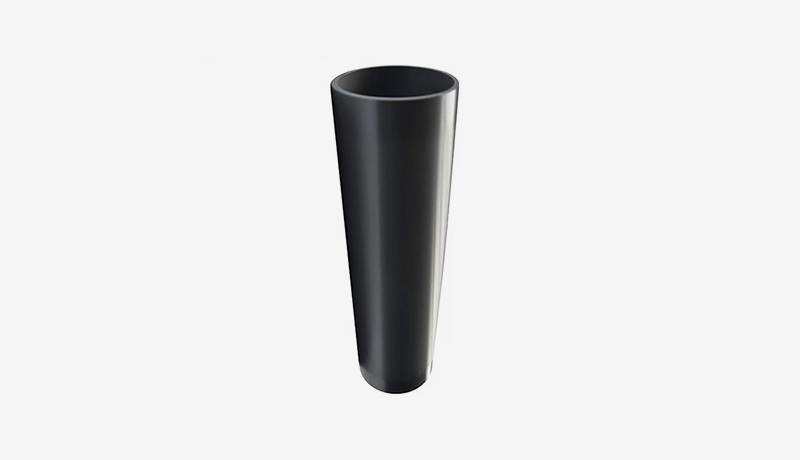
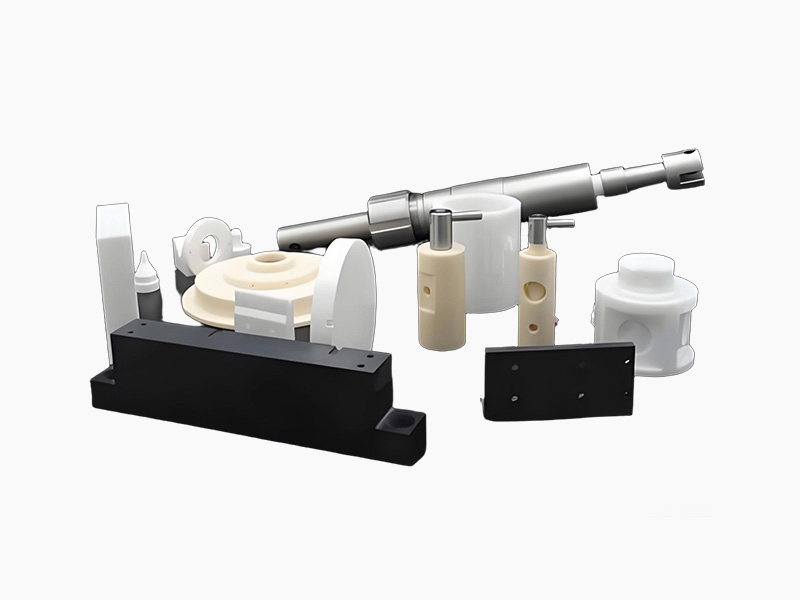
High-performance silicon nitride ceramic locating and centering pins for projection welding, resistance welding and demanding metal joining environments.
Designed to combine electrical insulation, high hardness, thermal shock resistance, high-temperature stability, low wear and resistance to welding spatter for longer-lasting and more stable welding fixtures.
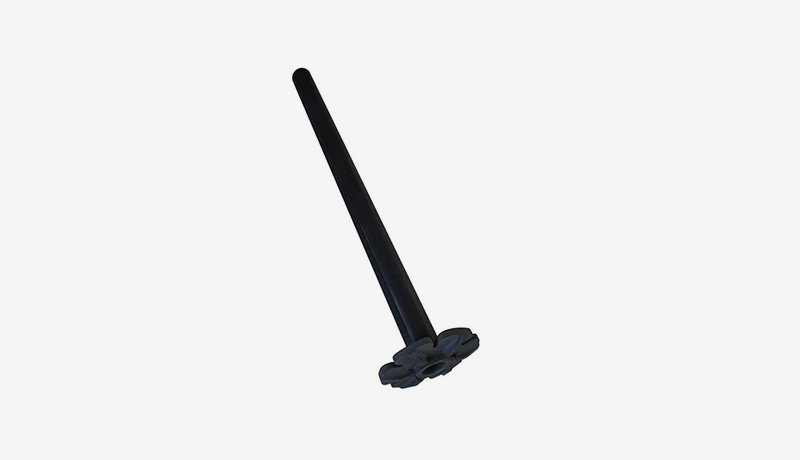
A Silicon Nitride Ceramic Spot Welding Pin is a precision technical ceramic component used for locating, centering, positioning or supporting workpieces during projection welding and resistance welding operations.
Unlike conventional metal locating pins, a silicon nitride ceramic pin combines high hardness, electrical insulation, thermal stability, thermal shock resistance and low wear. Its smooth finished surface can also help reduce the adhesion of welding spatter to the pin surface, making it suitable for repeated welding operations.
Projection welding and resistance welding expose locating and centering components to repeated thermal cycles, electrical fields, mechanical contact and welding spatter. The positioning component must therefore maintain its geometry while operating close to the welding zone.
Silicon nitride ceramic is particularly suitable for this type of environment because it combines high hardness and strength with electrical insulation and strong resistance to thermal shock. These properties allow a ceramic locating pin to remain dimensionally stable during repeated welding cycles when correctly designed and operated.
The smooth, polished surface of a properly finished ceramic pin can also reduce the tendency of welding spatter to remain attached to the locating surface. This can help maintain positioning accuracy and reduce cleaning or replacement frequency.
The supplied application information describes silicon nitride as a replacement solution for zirconia and metal locating pins in demanding projection-welding environments, particularly where long service intervals and stable positioning accuracy are required.
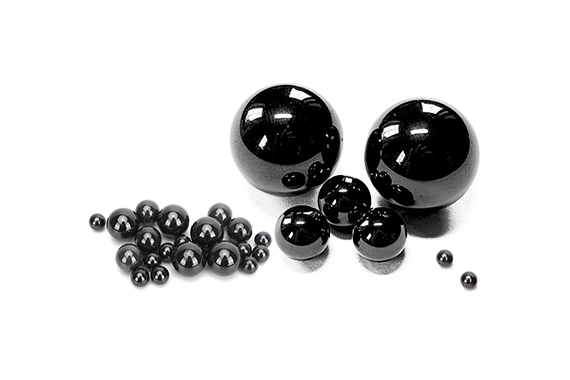
Silicon nitride (Si3N4) is a non-oxide advanced structural ceramic. Its combination of mechanical strength, hardness, thermal resistance, thermal shock resistance and electrical insulation makes it suitable for specialized welding components.
The numerical values below are reference material data. Actual values depend on silicon nitride grade, additives, density, sintering method, microstructure and finishing process. They should not be interpreted as guaranteed values for every finished welding pin.
| Material Property | Reference Data | Importance in Welding Pins |
|---|---|---|
| Chemical Formula | Si3N4 | Non-oxide advanced ceramic material |
| Density | Approx. 3.2 g/cm³ | Lower density than many engineering metals |
| Vickers Hardness | Approx. 1400-1800 HV reference | Supports high wear resistance |
| Thermal Expansion | Approximately 1/4 of steel according to supplied reference data | Helps limit thermal dimensional change |
| Reference Temperature Stability | Material-level stability described up to approximately 1200°C | Relevant to high-temperature welding environments |
| Volume Resistivity | Approx. 10¹⁴-10¹⁶ Ω·cm at room temperature | High electrical insulation |
| Thermal Shock Resistance | High | Important during repeated heating and cooling cycles |
| Chemical Stability | High chemical and oxidation stability | Useful in demanding industrial environments |
High hardness helps the pin resist mechanical wear, surface damage and dimensional deterioration caused by repeated contact with metal workpieces.
Silicon nitride offers high mechanical strength for ceramic material and can be engineered for locating-pin geometries subjected to repeated mechanical loading.
Repeated welding creates rapid heating and cooling cycles. Silicon nitride's thermal shock resistance is an important advantage for components positioned close to the welding zone.
Unlike electrically conductive metal pins, silicon nitride is electrically insulating, making it useful in resistance and projection welding fixtures where electrical isolation is required.
Silicon nitride maintains useful mechanical and thermal properties at elevated temperatures, making it appropriate for positioning components exposed to intense welding heat.
High hardness, wear resistance and dimensional stability can reduce progressive deterioration of the locating surface during repeated production cycles.
A smooth polished ceramic surface can make it more difficult for welding spatter to adhere strongly, helping maintain the working geometry of the locating pin.
Properly engineered silicon nitride pins can maintain their locating geometry over extended welding cycles, supporting repeatable positioning accuracy.
Spot welding pins are often application-specific components. The exact dimensions, tolerances and mounting configuration should therefore be determined from the welding fixture, workpiece geometry and customer drawing.
| Material | Silicon Nitride (Si3N4) |
|---|---|
| Product Type | Spot welding pin / projection welding pin / locating pin / centering pin |
| Geometry | Custom geometry according to customer drawing or fixture design |
| Diameter | Application dependent |
| Overall Length | Custom according to welding fixture requirements |
| Tip Geometry | Straight, stepped, tapered, rounded or drawing-specific configurations |
| Surface Finish | Precision ground or polished according to application requirements |
| Electrical Property | Electrically insulating |
| Temperature Capability | Suitable for high-temperature environments; actual working temperature depends on design and welding conditions |
| Customization | Drawing-based and application-specific customization available |
Silicon Nitride Ceramic Spot Welding Pins are designed for industrial processes where a locating or centering component must withstand repeated welding heat, electrical exposure, mechanical contact and welding spatter.
Used for locating and centering metal sheets, nuts and other automotive body components during repeated projection welding operations.
Suitable for resistance-welding fixtures where electrical insulation and resistance to repeated thermal cycles are important.
Can be used as a locating or centering component when welding nuts, studs and other projection-welded metal parts to sheet-metal assemblies.
Applicable to fixtures and positioning systems exposed to localized high temperatures where conventional polymer or metal positioning components may not provide the required combination of properties.
Suitable for automated production fixtures where repeated positioning accuracy, low maintenance frequency and stable operation are important for production continuity.
Projection welding can expose a locating pin to a combination of heat, electrical energy, mechanical loading and welding spatter. The supplied application description refers to welding environments involving approximately 30–40 kA current through copper electrodes and working temperatures around 800°C. Actual welding current and temperature vary according to equipment, material, electrode design and process parameters.
In this environment, a suitable locating pin needs to remain electrically isolated, resist rapid temperature changes and maintain its dimensional geometry. Silicon nitride addresses these requirements through its combination of electrical insulation, thermal shock resistance, high hardness and high-temperature stability.
The result is a ceramic component that can be integrated into welding fixtures without becoming a conductive path through the positioning element, while its hard and smooth surface can help reduce wear and welding-spatter adhesion.
Material selection for a welding locating pin depends on the welding current, temperature, mechanical loading, geometry, fixture design and required service interval. The following comparison summarizes the characteristics described for these material categories.
| Property | Silicon Nitride | Zirconia | Metal |
|---|---|---|---|
| Electrical Insulation | Excellent | Excellent | Conductive |
| Hardness | Very high | High | Depends on alloy and heat treatment |
| Thermal Shock Resistance | High | Application dependent | Depends strongly on alloy and geometry |
| Wear Resistance | Very high | High | Material dependent |
| Welding Spatter Adhesion | Smooth polished surface can reduce adhesion | Can provide a smooth ceramic surface | Spatter adhesion can be an issue |
| Thermal Expansion | Relatively low | Higher than Si3N4 | Generally higher |
The comparison is a general engineering overview. Actual performance depends on the selected material grade, pin geometry, welding cycle, mechanical load, temperature, current and fixture design.
One of the main economic benefits of ceramic welding locating pins is the potential reduction in replacement frequency. The supplied application information states that conventional metal welding pins may require replacement several times per day because of wear and welding-spatter adhesion, while silicon nitride ceramic locating pins may require replacement approximately once per month under the described production conditions.
The same source information describes conventional ceramic welding pins as having a service life around 40 times that of certain metal welding pins and silicon nitride locating pins as having a service life around five times that of zirconia locating pins. These figures should be treated as application-specific reference claims rather than universal lifetime guarantees.
In production environments, a longer service interval can reduce fixture maintenance, replacement labor and unplanned interruptions. It can also help maintain stable locating accuracy over a larger number of welding cycles.
Precision welding pins require controlled ceramic processing because the final performance depends not only on the Si3N4 material but also on density, microstructure, geometry, grinding quality and surface finish.
Suitable Si3N4 ceramic powder is selected according to the required mechanical, thermal and electrical properties.
Binders, sintering additives and other process components can be incorporated to achieve suitable forming and densification behavior.
The ceramic blank is formed using a suitable process based on the pin geometry, size and production requirements.
Controlled drying and binder removal prepare the formed ceramic body for high-temperature sintering.
The formed Si3N4 component is sintered under controlled conditions to obtain the required density and ceramic microstructure.
Initial machining establishes the approximate dimensions and geometry of the sintered welding pin.
Diamond grinding and precision finishing can be used to achieve the required dimensional accuracy, surface finish and smooth locating surface.
Finished pins are inspected according to the applicable drawing and quality requirements before protective packaging and shipment.
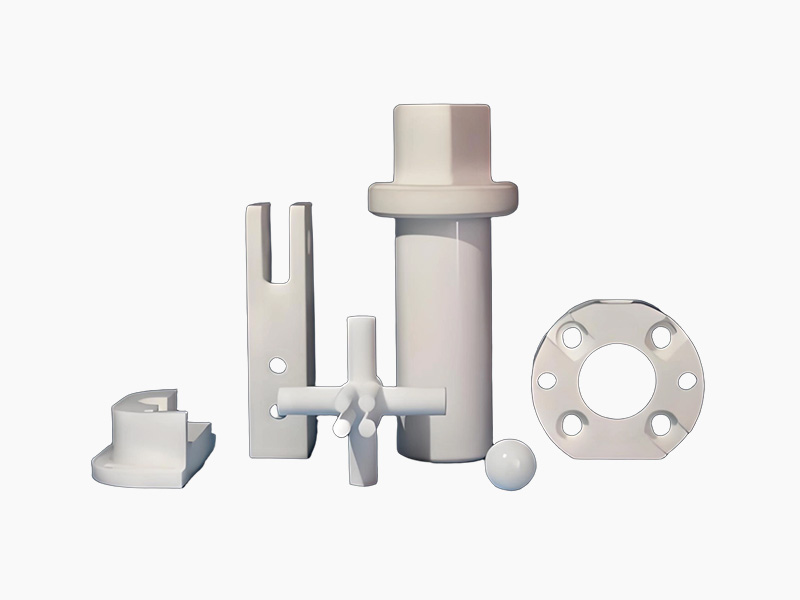
Welding locating pins are often integrated directly into a customer's welding fixture. For this reason, HUACIJULI can work from drawings, existing samples or application specifications when developing custom silicon nitride ceramic pins.
XIAMEN HUACIJULI focuses on advanced technical ceramic components and customized ceramic solutions for industrial applications. For silicon nitride welding pins, the emphasis is on material selection, precision geometry and application-specific processing.
Focus on advanced ceramic materials and precision ceramic components for demanding industrial applications.
Silicon nitride grades can be considered according to temperature, mechanical loading, electrical insulation and wear requirements.
Complex locating-pin geometries can be developed according to drawings, samples and fixture requirements.
Precision grinding and surface finishing are essential for maintaining the dimensional accuracy required by welding fixtures.
HUACIJULI works with technical ceramic materials including silicon nitride, zirconia and aluminum nitride for different engineering requirements.
Customers can provide welding current, temperature, fixture geometry, replacement frequency and other operating conditions for application-specific evaluation.
It is a precision Si3N4 ceramic component used to locate, center or position metal parts during projection welding, spot welding and resistance welding operations.
Silicon nitride combines high hardness, high wear resistance, electrical insulation, thermal shock resistance and high-temperature stability. These properties are useful for locating components positioned close to a welding zone.
Yes. Silicon nitride is an electrically insulating ceramic. The supplied reference data gives a volume resistivity of approximately 10¹⁴–10¹⁶ Ω·cm at room temperature.
Silicon nitride has strong high-temperature capability and thermal shock resistance. The supplied application description refers to welding environments around 800°C, while material-level reference information describes silicon nitride stability at temperatures substantially above this level. Actual allowable pin temperature depends on grade, geometry, heat transfer and welding-cycle conditions.
A smooth, polished silicon nitride surface can reduce the tendency of welding spatter to adhere strongly to the pin compared with some metal surfaces. Actual spatter behavior depends on the welding process, surface finish and operating conditions.
Service life depends on welding current, cycle frequency, temperature, mechanical loading, fixture design and surface finish. The supplied application information reports approximately monthly replacement under a particular production condition and describes a service-life advantage over zirconia and metal pins. These figures are application-specific and should not be treated as universal guarantees.
Material selection depends on the specific welding application. Silicon nitride provides a combination of high hardness, high thermal shock resistance, electrical insulation, relatively low thermal expansion and strong mechanical properties that can make it suitable for demanding welding locating-pin applications.
Custom silicon nitride welding pins can be discussed based on customer drawings, existing samples, dimensions and fixture requirements. Different pin geometries can be considered according to the application.
Useful information includes the pin drawing, diameter, length, tip geometry, mounting dimensions, welding process, welding current, approximate temperature, cycle frequency, workpiece material, mechanical loading and expected service interval.
They can be suitable for automated welding fixtures where electrical insulation, dimensional stability, wear resistance and longer maintenance intervals are important. Final suitability should be evaluated against the actual welding cycle and fixture design.
Send your welding pin drawing, existing sample, dimensions or application conditions to XIAMEN HUACIJULI for a custom silicon nitride ceramic solution.
Product Specifications
Silicon nitride ceramic dowel pins specifications and models | ||||
Serial number | model | Bottom diameter | high | Remark |
1 | M4 round head | Ø12mm | 28mm | No punch hole |
2 | M5 round head | 26.5mm | ||
3 | M6 round head | 25.9mm | ||
4 | M8 round head | 25.75mm | ||
5 | M10 round head | Ø16mm | 28.8mm | |
6 | M12 round head | 31.1mm | ||
7 | 7/16 round head | 30.65mm | ||
8 | M4 pointed | Ø12mm | 29mm | |
9 | M5 pointed | 30mm | ||
10 | M6 pointed | 31.5mm | ||
11 | M8 pointed | 31.5mm | ||
12 | M10 pointed | Ø16mm | 34.5mm | |
13 | M12 pointed | 35.8mm | ||
14 | M6 internal thread hole | Ø7mm | 19.991mm | Punching with thread and positioning groove |
15 | M8 internal thread hole | Ø8.9mm | 22.95mm | |
16 | M10 internal thread hole | Ø10.9mm | 26.6mm | |
Technical Parameters
Items | Unit | Si₃N₄ | ZrO₂ | AI₂O₃ |
/ | / | Gas Pressure Sintering | Yttria stabilized | 99.70% |
Young's Modulus of Elasticity | Mpa | 300-320 | 210 | 380 |
density | Mg/m³ | 3.24 | 6.04 | 3.95 |
Compression strength | Mpa | 3000 | 2200 | 2500 |
Flexural Strength | Mpa | 850 | >1000 | 300-400 |
Vickers hardness | HV | 1650 | 1240 | 16000 |
Fracture Toughness | MPa·m½ | 6-7 | 8-10 | 3-4 |
Coefficient of Thermal Expansion | 10-⁶/℃ | 3.3 | 10.3 | 8.4 |
Thermal Conductivity | W/mk | 21 | 3 | 28 |
Max Working Temperature | ℃ | 1300-1600 | 最高1000 | 1300-1500 |
Volume Resistivity | Ω·cm | 1014 | / | 1014 |
Average toughness | μm | 0.05 | 0.10 | 0.10 |
Thermal shock resistance | ℃ | Ca.700 | Ca.300 | Ca.150 |
Stress Cycle | Second-rate | 107-109 | 105 | / |
Support personalized customization.